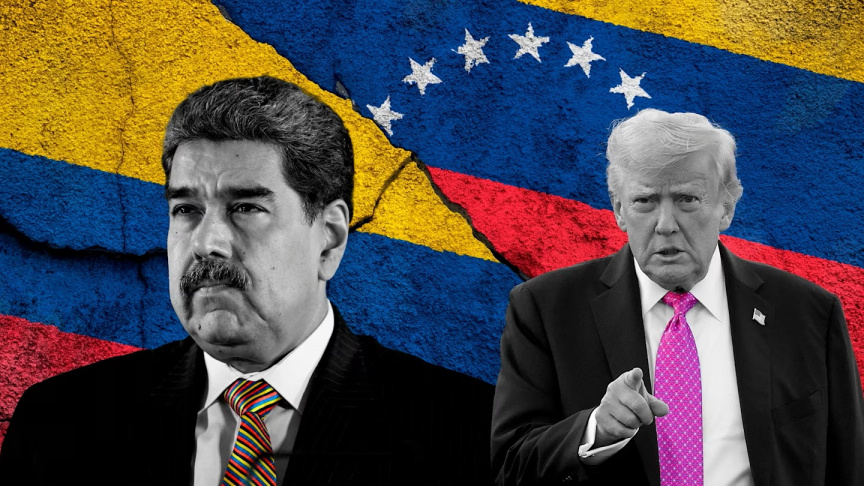

Former US president Donald Trump adopted a hardline stance against Venezuelan President Nicolás Maduro as part of a broader policy aimed at confronting what Washington viewed as authoritarianism, corruption, and threats to regional stability in Latin America.
One of the main reasons behind Trump’s move was the US government’s rejection of Maduro’s legitimacy following Venezuela’s disputed 2018 presidential election. The vote was widely criticized by the United States, the European Union, and several Latin American countries as neither free nor fair. In response, the Trump administration formally recognized opposition leader Juan Guaidó as Venezuela’s interim president in 2019, arguing that Maduro had unlawfully clung to power.
Another key factor was Venezuela’s deepening economic and humanitarian crisis. Under Maduro’s leadership, the oil-rich nation experienced hyperinflation, widespread shortages of food and medicine, and a mass exodus of millions of citizens. The Trump administration blamed the crisis on government mismanagement and corruption, asserting that pressure on Maduro was necessary to force political change and restore democracy.
Security concerns also played a role. US officials accused the Maduro government of links to drug trafficking, organized crime, and armed groups, including Colombia’s left-wing rebels. In 2020, the US Justice Department charged Maduro and several senior officials with narcotics terrorism, alleging they conspired to flood the United States with cocaine—claims strongly denied by Caracas.
Ideologically, Trump’s policy aligned with his administration’s broader opposition to socialist governments in the Western Hemisphere. Venezuela, along with Cuba and Nicaragua, was labeled part of a “troika of tyranny,” reflecting Washington’s view that these governments undermined democratic values and regional security.
To pressure Maduro, the Trump administration imposed sweeping economic sanctions, particularly targeting Venezuela’s vital oil sector, and increased diplomatic isolation. While supporters argued the measures were necessary to weaken an authoritarian regime, critics said sanctions worsened the humanitarian situation without dislodging Maduro from power.
In summary, Trump moved against Maduro due to disputed elections, human rights concerns, alleged criminal activities, ideological opposition to socialism, and fears over regional instability. Despite sustained pressure, Maduro remained in control, highlighting the limits and controversies of the administration’s confrontational approach toward Venezuela.
Why Trump moved against Maduro